
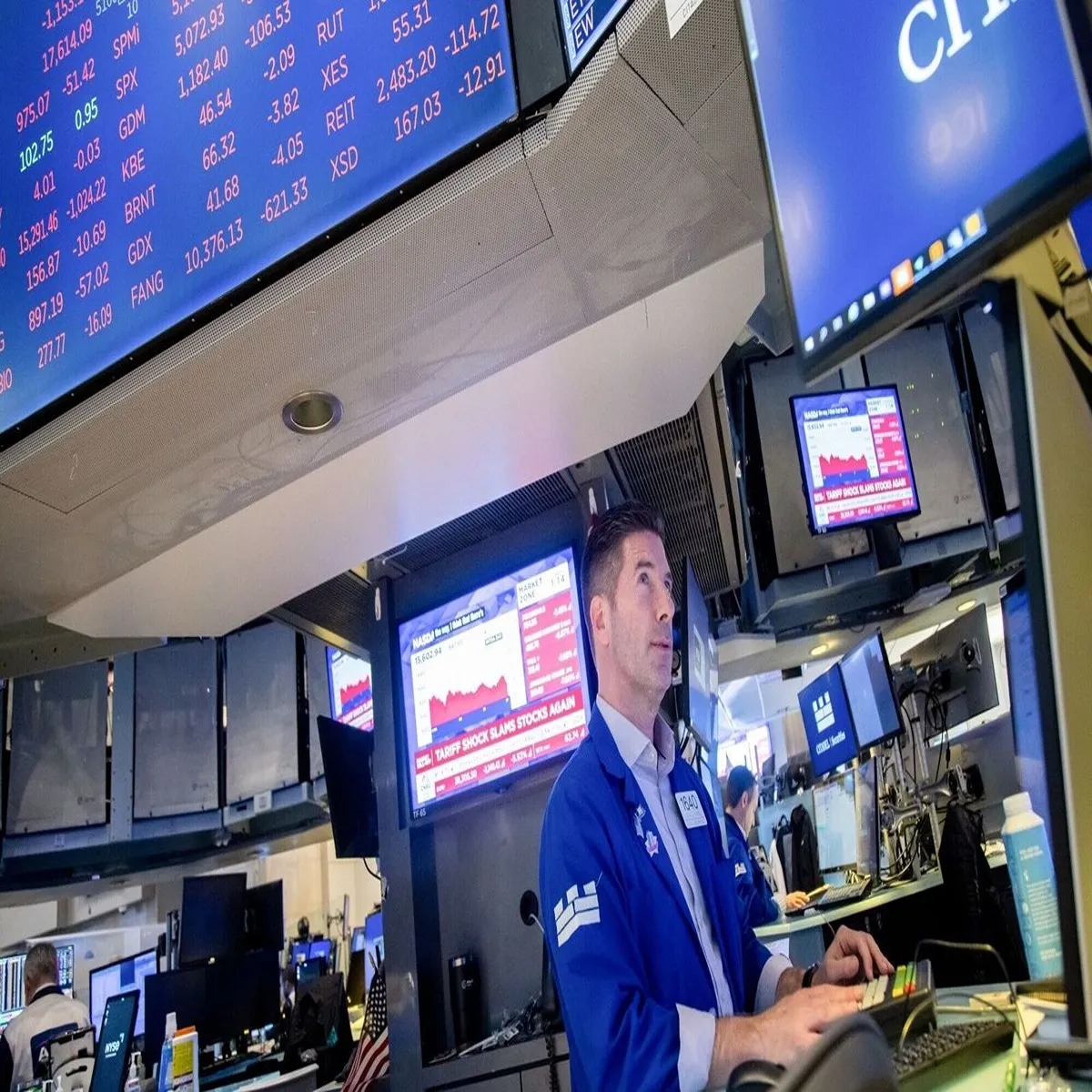
Wall- The U.S. stock market is navigating a delicate balance this week, with major indexes showing resilience as investors digest fresh economic data, Federal Reserve signals, and a new wave of corporate earnings. While volatility has not disappeared, recent sessions suggest a more measured tone across Wall Street, reflecting cautious optimism about inflation trends and the broader economic outlook.
Market Performance Reflects Cautious Confidence
U.S. equities have remained relatively stable in recent trading sessions, with the S&P 500 hovering near recent highs while the Nasdaq Composite continues to outperform, driven by strength in technology stocks. The Dow Jones Industrial Average, meanwhile, has posted modest gains, supported by industrial and financial sector stability.
This steady performance comes after months of uncertainty tied to interest rate policy and recession concerns. Investors appear to be recalibrating expectations, shifting from fears of aggressive tightening toward a more balanced view of monetary policy.
Federal Reserve Outlook Remains Central to Sentiment
The Federal Reserve continues to play a decisive role in shaping market direction. Recent comments from policymakers संकेत that while inflation has cooled compared to previous peaks, it has not yet reached the central bank’s long-term target.
Market participants are closely monitoring any indication of future rate adjustments. Current expectations suggest that the Fed may maintain rates at elevated levels for longer rather than implementing rapid cuts. This “higher-for-longer” stance has tempered excessive market enthusiasm but has not derailed upward momentum entirely.
Treasury yields have responded accordingly, stabilizing after earlier fluctuations. Lower volatility in bond markets has provided some relief to equity investors, particularly in growth sectors sensitive to interest rate changes.
Corporate Earnings Deliver Mixed but Encouraging Signals
The latest earnings season has offered a mixed yet broadly constructive picture of corporate America. Several large-cap companies have exceeded analyst expectations, particularly in the technology and consumer discretionary sectors.
Tech giants continue to benefit from sustained demand in artificial intelligence, cloud computing, and digital services. Meanwhile, consumer-focused companies have demonstrated resilience despite higher borrowing costs and persistent inflation pressures.
However, not all sectors have performed equally. Some energy and manufacturing firms have reported softer outlooks, citing global demand uncertainties and supply chain adjustments. Despite these pockets of weakness, overall earnings growth has been sufficient to support current market valuations.
Inflation Trends Provide Measured Relief
Recent economic data संकेत that inflation in the United States is gradually moderating, although progress remains uneven. Core inflation metrics, which exclude volatile food and energy prices, continue to show a slow but consistent decline.
For investors, this trend is महत्वपूर्ण because it directly influences Federal Reserve policy decisions. A sustained downward trajectory in inflation could eventually open the door to rate cuts, though policymakers have emphasized the need for clear and lasting evidence before making any moves.
Consumer spending data also suggests that households remain active, though more selective in their purchasing behavior. This shift indicates that while economic growth continues, it is becoming more dependent on targeted demand rather than broad-based consumption.
Technology Sector Continues to Lead the Rally
Technology stocks have once again emerged as a primary driver of market gains. Companies involved in artificial intelligence infrastructure, semiconductor production, and software services have attracted significant investor interest.
The sector’s strength is partly due to its long-term growth potential and its relative insulation from short-term economic fluctuations. Additionally, strong balance sheets and consistent revenue streams have made large tech firms attractive during periods of uncertainty.
That said, analysts caution that valuations in some areas of the tech sector are becoming stretched. Investors are increasingly selective, favoring companies with clear profitability paths rather than speculative growth narratives.
Global Factors Add Layers of Complexity
While domestic factors remain dominant, global developments continue to influence U.S. markets. Ongoing geopolitical tensions, fluctuating commodity prices, and economic slowdowns in key international markets have introduced additional variables.
China’s uneven economic recovery and Europe’s sluggish growth have implications for multinational corporations and export-driven industries. These external pressures have contributed to cautious guidance from several U.S. companies with significant international exposure.
At the same time, a relatively मजबूत U.S. dollar has impacted earnings for firms generating revenue abroad, further complicating the outlook.
What Investors Are Watching Next
Looking ahead, market participants are focusing on several key indicators:
- Upcoming inflation reports and labor market data
- Federal Reserve meeting minutes and policy statements
- Continued corporate earnings releases
- Developments in global economic conditions
These factors will likely determine whether the current market stability evolves into a sustained rally or reverts to heightened volatility.
A Market Defined by Balance Rather Than Extremes
The current phase of the U.S. stock market can best be described as a period of balance. Extreme pessimism has eased, but unchecked optimism remains in check. Investors are navigating a landscape shaped by data-driven decisions rather than speculative momentum.
This environment favors disciplined strategies, with an emphasis on fundamentals, earnings quality, and long-term growth potential. While short-term fluctuations are inevitable, the broader trend suggests a market gradually adapting to a new economic reality defined by moderate growth and controlled inflation.