
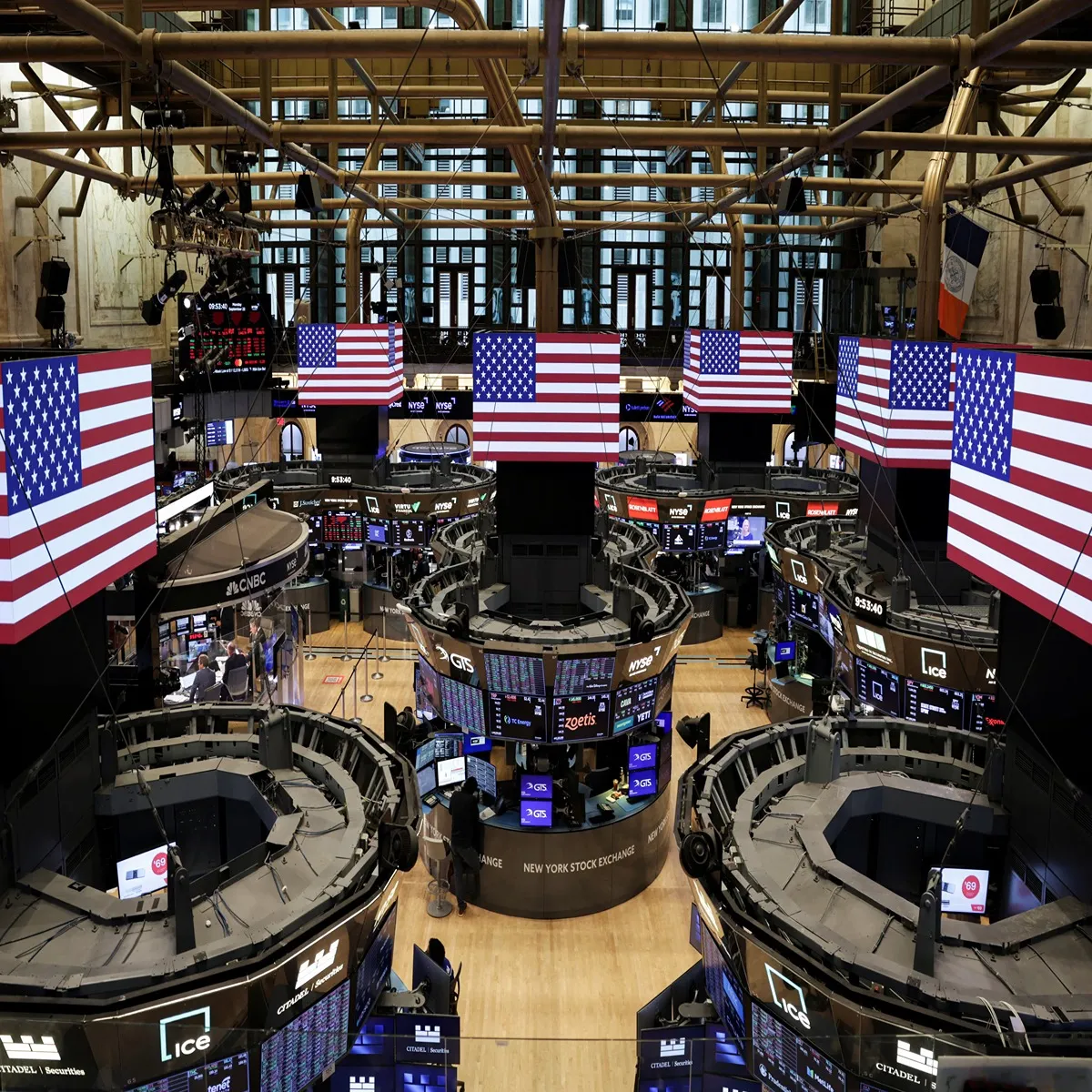
Wall- The U.S. stock market is navigating a cautious yet resilient phase as investors balance expectations around Federal Reserve policy with a fresh wave of corporate earnings. Major indices, including the S&P 500 and Nasdaq Composite, have shown moderate stability in recent sessions, reflecting a market that is neither overly optimistic nor deeply concerned—but firmly focused on incoming data.
Market Snapshot: Stability Amid Uncertainty
After a volatile start to the year, U.S. equities have entered a relatively stable trading range. The S&P 500 continues to hover near recent highs, supported by strong performances in technology and consumer discretionary sectors. Meanwhile, the Dow Jones Industrial Average has seen more muted gains, weighed down by industrial and energy stocks.
This stability comes despite ongoing concerns about inflation and interest rates. Investors are closely monitoring economic indicators such as job growth, wage inflation, and consumer spending, all of which play a crucial role in shaping Federal Reserve decisions.
Federal Reserve Policy Remains the Key Driver
At the center of market sentiment is the Federal Reserve’s monetary policy stance. While inflation has cooled compared to previous peaks, it remains above the Fed’s long-term target. As a result, policymakers have signaled a “higher-for-longer” interest rate environment.
This has led to mixed reactions across sectors. Growth stocks, particularly in technology, have shown resilience due to strong earnings and innovation-driven optimism. However, rate-sensitive sectors such as real estate and utilities continue to face pressure.
Market participants are now pricing in the possibility that rate cuts may not arrive as quickly as previously expected. This shift has tempered some of the bullish momentum seen earlier in the year.
Earnings Season Brings Mixed Signals
Corporate earnings reports have added another layer of complexity. While several large-cap companies have exceeded expectations, others have issued cautious forward guidance, citing cost pressures and uncertain demand.
Tech giants have largely driven positive sentiment, with strong revenue growth fueled by artificial intelligence investments and cloud computing demand. On the other hand, sectors like retail and manufacturing have shown signs of slowing growth, reflecting changing consumer behavior and global economic headwinds.
Investors are paying close attention not just to earnings results, but also to management commentary. Forward-looking statements are increasingly influencing stock movements, often more than the actual earnings numbers.
AI and Tech Continue to Lead Market Momentum
Artificial intelligence remains a dominant theme in the U.S. stock market. Companies involved in AI development, semiconductor manufacturing, and cloud infrastructure have seen significant investor interest.
This trend has contributed to a concentration of gains within a relatively small group of stocks, raising concerns about market breadth. While the broader market has performed reasonably well, a handful of mega-cap tech companies continue to account for a large portion of overall gains.
Analysts suggest that while AI-driven growth is real and impactful, diversification remains important for long-term investors.
Consumer Strength Supports Economic Outlook
One of the key pillars supporting the market is the resilience of the U.S. consumer. Despite higher borrowing costs, consumer spending has remained relatively strong, supported by a robust labor market and rising wages.
Retail sales data and employment figures continue to indicate that the economy is not slowing as sharply as some had feared. This has helped alleviate concerns about an imminent recession, although risks remain.
However, there are early signs of strain. Credit card debt levels have risen, and savings rates have declined, suggesting that consumers may become more cautious in the coming months.
Global Factors Add to Market Complexity
Beyond domestic factors, global developments are also influencing U.S. markets. Geopolitical tensions, supply chain adjustments, and economic conditions in major economies like China and Europe are all contributing to market dynamics.
For example, slower growth in China has impacted commodity prices and multinational corporate earnings. Meanwhile, ongoing geopolitical uncertainties continue to affect investor sentiment and risk appetite.
What Investors Are Watching Next
Looking ahead, several key factors are expected to shape the direction of the U.S. stock market:
- Upcoming inflation data and Federal Reserve meetings
- Continued corporate earnings releases
- Labor market trends and consumer spending patterns
- Developments in AI and technology sectors
- Global economic indicators and geopolitical events
Market analysts emphasize the importance of staying data-driven in the current environment. Short-term volatility is likely, but long-term fundamentals remain relatively intact.
Balanced Outlook: Caution Without Panic
The current market environment reflects a balance between optimism and caution. While strong corporate earnings and technological innovation provide support, persistent inflation and higher interest rates continue to pose challenges.
For investors, this means navigating a market that rewards selectivity and long-term thinking. Broad-based rallies may be less common, but opportunities remain in sectors with strong fundamentals and growth potential.
As Wall Street moves deeper into the year, the interplay between economic data, policy decisions, and corporate performance will remain critical in determining the market’s trajectory.