
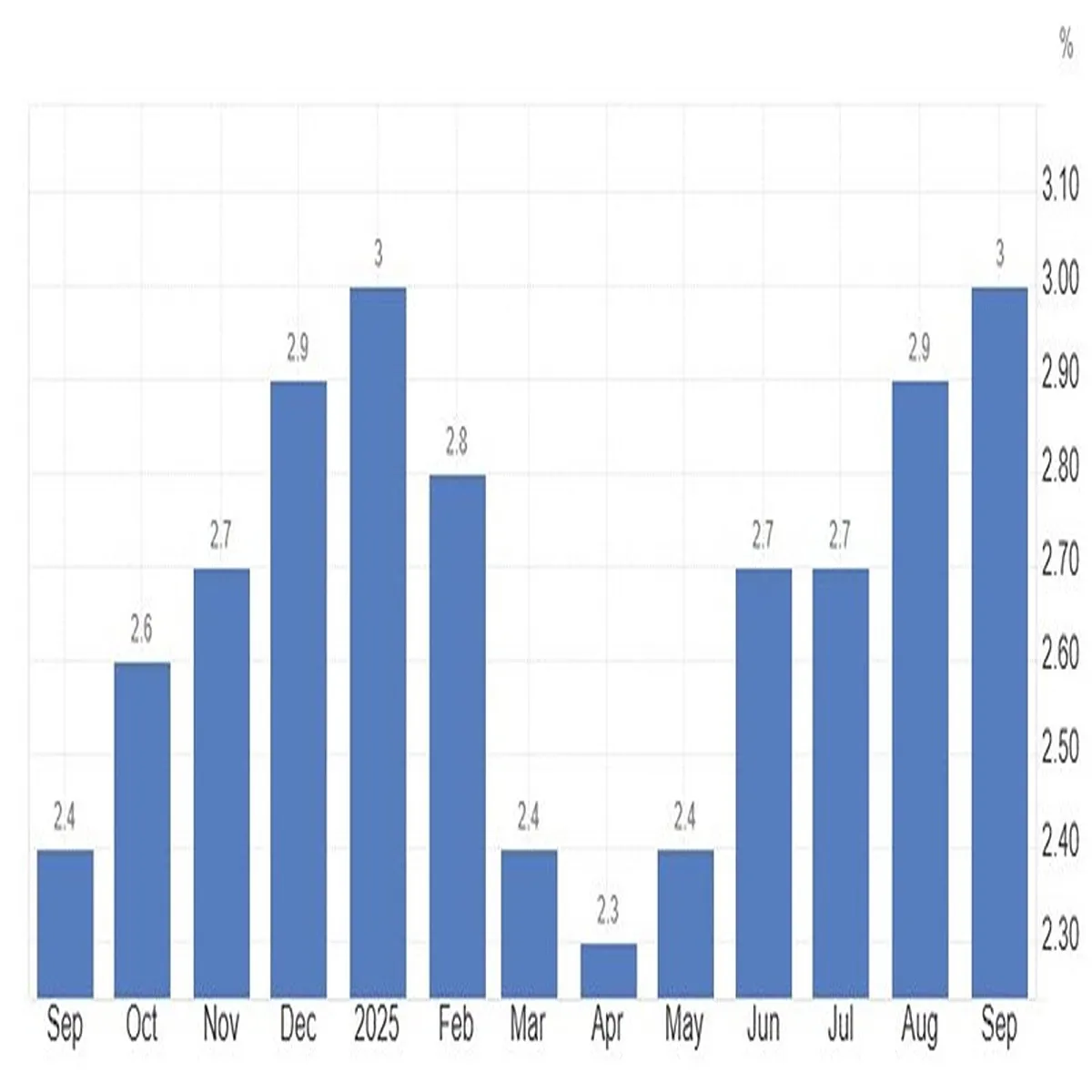
US- The latest data from the U.S. economy suggests that inflation pressures are easing, but not fast enough to prompt an immediate shift in monetary policy. According to recent government releases, consumer prices rose at a slower pace compared to earlier in the year, offering some relief to households and investors. However, officials at the Federal Reserve remain cautious, signaling that interest rates could stay higher for longer to ensure inflation returns to the central bank’s 2% target.
Inflation Trend Shows Gradual Improvement
Recent Consumer Price Index (CPI) data indicates that inflation has moderated on a year-over-year basis, driven largely by declining energy prices and stabilizing supply chains. Core inflation, which excludes volatile food and energy components, also showed signs of cooling but continues to remain above the Federal Reserve’s comfort zone.
Economists note that while the downward trend is encouraging, the pace of decline is uneven. Housing costs and services inflation remain persistent contributors to overall price pressures, reflecting structural challenges in the U.S. economy.
Federal Reserve Maintains Data-Driven Approach
Federal Reserve officials have reiterated their commitment to a data-driven policy path. In recent statements, policymakers emphasized that while progress has been made, premature rate cuts could risk reigniting inflation.
Market expectations for interest rate cuts have shifted in recent weeks. Earlier forecasts anticipated multiple rate reductions within the year, but stronger-than-expected labor market data and sticky core inflation have tempered those expectations. Analysts now predict a more gradual easing cycle, potentially beginning later than initially anticipated.
Labor Market Strength Complicates Policy Decisions
The resilience of the U.S. labor market continues to play a critical role in shaping monetary policy. Unemployment remains near historic lows, and job creation has consistently exceeded forecasts.
While strong employment supports consumer spending and economic growth, it also contributes to wage inflation. Higher wages can sustain consumer demand, making it more challenging for inflation to decline quickly. This dynamic places the Federal Reserve in a delicate position, balancing economic growth with price stability.
Consumer Spending Remains Steady
Despite elevated borrowing costs, consumer spending in the United States has remained relatively robust. Retail sales data shows continued activity across key sectors, including services, travel, and discretionary goods.
However, there are emerging signs of strain among lower-income households. Rising credit card balances and higher delinquency rates suggest that some consumers are increasingly relying on debt to maintain spending levels. This trend could become more pronounced if interest rates remain elevated for an extended period.
Housing Market Faces Ongoing Pressure
The housing sector continues to be one of the most interest rate-sensitive areas of the economy. Mortgage rates, which have remained near multi-year highs, have dampened homebuying activity and slowed housing supply.
Limited inventory has kept home prices relatively stable, despite reduced demand. Rent prices, while showing signs of cooling in some regions, still contribute significantly to overall inflation metrics. Analysts expect housing costs to gradually ease, but the timeline remains uncertain.
Financial Markets React to Policy Signals
Equity and bond markets have responded cautiously to the evolving economic outlook. Treasury yields have fluctuated as investors reassess the timing of potential rate cuts, while stock markets have shown mixed performance amid uncertainty.
Technology and growth stocks, which are particularly sensitive to interest rate expectations, have experienced volatility. Meanwhile, sectors such as energy and financials have shown relative resilience, supported by broader economic stability.
Outlook: A Slow Path Toward Stability
Looking ahead, the trajectory of inflation and interest rates will depend heavily on incoming economic data. Key indicators to watch include wage growth, consumer spending patterns, and global economic developments.
Most economists agree that the Federal Reserve is unlikely to rush into policy changes. Instead, a cautious and measured approach is expected, with policymakers prioritizing long-term stability over short-term market reactions.
For businesses and consumers alike, this environment underscores the importance of financial planning and adaptability. While inflation is gradually moving in the right direction, the path to price stability is proving to be more complex than initially anticipated.