
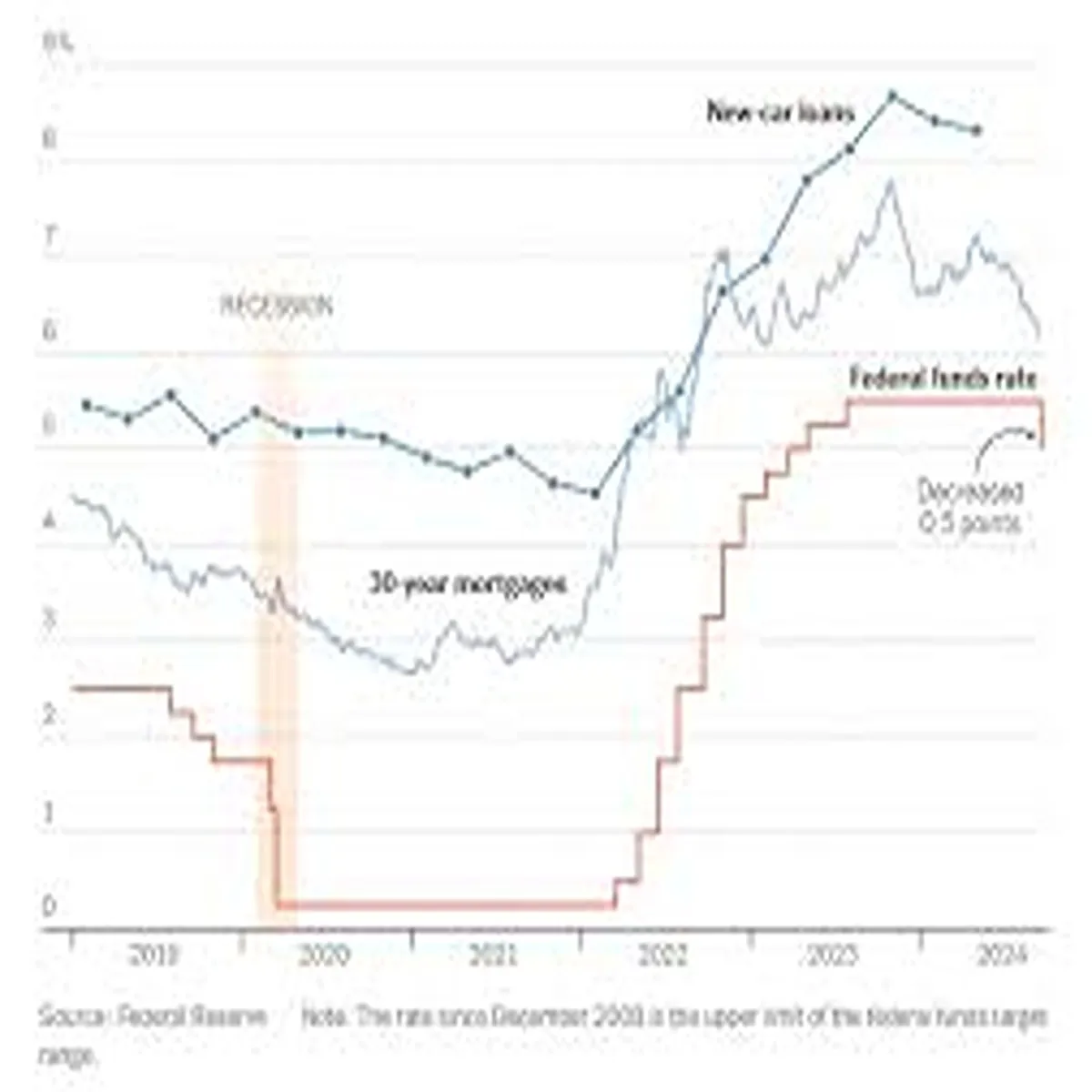
US- The US financial landscape is entering a critical phase as investors, policymakers, and businesses weigh mixed economic signals against the backdrop of persistent inflation concerns and evolving interest rate expectations. Recent data releases and Federal Reserve commentary suggest that while the economy remains resilient, uncertainty around monetary policy is likely to shape market behavior in the months ahead.
Strong Labor Market Keeps Economic Momentum Intact
The US labor market continues to demonstrate resilience, providing a strong foundation for overall economic stability. Recent job reports indicate steady employment growth, with unemployment rates hovering near historic lows. Wage gains, though moderating slightly, remain supportive of consumer spending.
This strength in employment has played a key role in preventing a broader economic slowdown. For many households, stable income levels have helped offset higher borrowing costs and persistent inflation in essential categories such as housing and healthcare.
However, economists caution that a tight labor market may also complicate the Federal Reserve’s efforts to bring inflation fully under control. Sustained wage growth can contribute to price pressures, especially in service sectors.
Inflation Trends Show Progress but Remain Uneven
Inflation has cooled compared to its peak levels in recent years, but progress has been uneven across different sectors of the economy. While goods prices have stabilized and, in some cases, declined, services inflation remains stubbornly elevated.
Core inflation metrics—closely watched by policymakers—continue to show that underlying price pressures have not fully subsided. This has led to a more cautious stance from the Federal Reserve, which is balancing the need to avoid overtightening with the risk of easing too soon.
Energy prices and global supply chain dynamics also continue to influence inflation trends, adding another layer of unpredictability to the outlook.
Federal Reserve Signals Data-Driven Policy Approach
The Federal Reserve has emphasized a data-dependent approach in recent communications, indicating that future interest rate decisions will hinge on incoming economic data rather than a predetermined path.
Market participants are closely monitoring signals from central bank officials for clues about the timing of potential rate cuts. While some investors had anticipated policy easing earlier, recent economic strength has pushed expectations further out.
This cautious stance reflects the central bank’s priority of ensuring that inflation returns sustainably to its target level before making significant policy shifts.
Stock Market प्रतिक्रिया: Volatility Returns Amid Uncertainty
US equity markets have responded to these mixed signals with increased volatility. Major indices have experienced fluctuations as investors reassess valuations in light of higher-for-longer interest rate expectations.
Growth stocks, particularly in the technology sector, have shown sensitivity to interest rate movements, while defensive sectors such as utilities and healthcare have attracted more stable inflows.
At the same time, corporate earnings reports have provided a mixed picture. While some companies have exceeded expectations, others have highlighted margin pressures and cautious forward guidance, reflecting broader economic uncertainties.
Bond Market Signals Shift in Investor Expectations
The bond market has become a focal point for understanding investor sentiment around interest rates and economic growth. Yields on US Treasury securities have remained elevated, reflecting expectations that rates may stay higher for longer than previously anticipated.
The yield curve—often viewed as a recession indicator—continues to draw attention. While parts of the curve remain inverted, recent movements suggest that investors are adjusting their outlook in response to evolving economic data.
Higher yields have also had implications for mortgage rates and corporate borrowing costs, influencing both consumer behavior and business investment decisions.
Consumer Spending Holds Steady but Faces Headwinds
Consumer spending, a key driver of the US economy, has remained relatively strong despite higher interest rates. Retail sales data indicates that households are still willing to spend, supported by job security and accumulated savings.
However, there are emerging signs of strain. Credit card balances have risen, and delinquency rates are beginning to edge higher. These trends suggest that while consumers remain active, financial pressures may be building beneath the surface.
Rising borrowing costs and tighter lending standards could further impact spending patterns in the months ahead.
Outlook: Navigating a Delicate Economic Balance
Looking ahead, the US financial outlook is characterized by a delicate balance between economic resilience and policy uncertainty. Key factors to watch include inflation trends, labor market dynamics, and Federal Reserve decision-making.
Investors are likely to remain cautious, with market movements driven by data releases and policy signals. While the risk of a sharp downturn appears limited for now, the path forward is expected to remain uneven.
For businesses and consumers alike, adaptability will be crucial as financial conditions continue to evolve. The coming months will play a significant role in determining whether the US economy can achieve a soft landing or faces renewed volatility.