
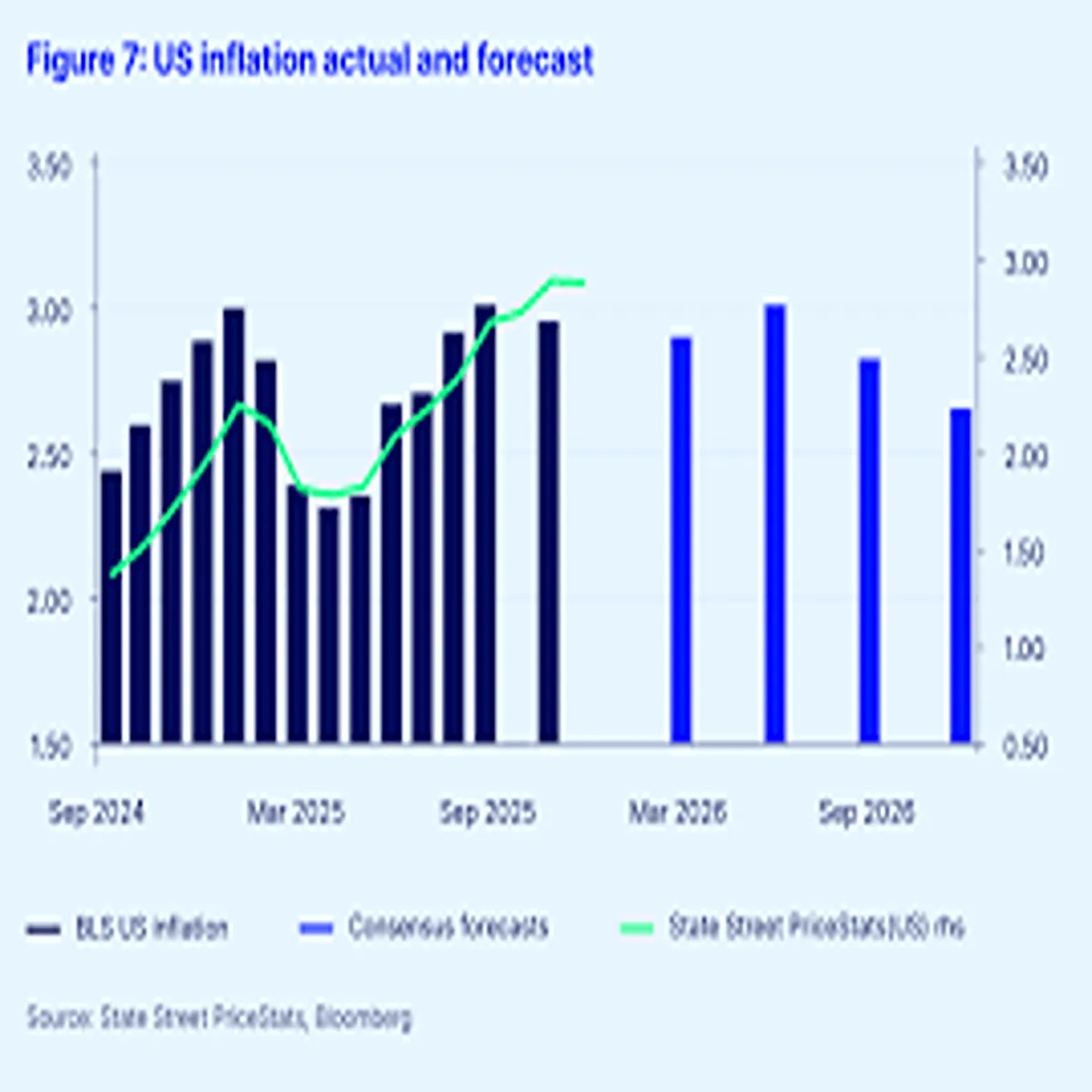
U.S. Inflation- The U.S. financial markets are entering a critical phase in early 2026 as investors closely monitor inflation trends, interest rate signals from the Federal Reserve, and evolving economic data. After two years of aggressive monetary tightening followed by a gradual pause in rate hikes, the outlook for the U.S. economy now depends heavily on whether inflation continues to cool without triggering a broader slowdown. For American households, businesses, and investors, the coming months could define the next stage of the economic cycle.
Inflation Trends Continue to Drive Market Expectations
Recent economic reports suggest that inflation in the United States is moderating but remains slightly above the Federal Reserve’s long-term target of 2%. Consumer price data released in early 2026 shows that price pressures in sectors such as housing, healthcare, and insurance remain persistent, even as energy and goods prices have stabilized.
Economists note that the pace of inflation has slowed compared with the peak levels seen in 2022 and 2023. However, policymakers remain cautious. Persistent wage growth and strong consumer spending have made it difficult for inflation to fall quickly.
Financial markets are particularly sensitive to inflation reports because they influence expectations around future interest rate decisions. When inflation readings come in lower than expected, stock markets tend to rally as investors anticipate easier monetary policy. Conversely, stronger-than-expected inflation data can lead to volatility in equities and bond yields.
Federal Reserve Signals a Data-Dependent Approach
The Federal Reserve has repeatedly emphasized that future policy decisions will remain “data dependent.” After maintaining higher interest rates for an extended period, policymakers are weighing whether the economy has cooled enough to begin gradual rate cuts.
Federal Reserve officials have indicated that they want stronger evidence that inflation is moving sustainably toward the 2% target before adjusting monetary policy. This cautious approach reflects lessons learned from past inflation cycles, where premature easing sometimes allowed inflation to rebound.
For investors, the central bank’s messaging has created a delicate balance. Markets are hopeful for rate cuts later in 2026, but the Fed has not committed to a specific timeline. As a result, bond markets and stock indexes continue to react sharply to each major economic report.
Stock Market Performance Reflects Mixed Economic Signals
U.S. equity markets have delivered uneven performance in recent months. Technology stocks and large-cap growth companies have remained relatively strong, supported by ongoing investment in artificial intelligence, cloud infrastructure, and semiconductor development.
At the same time, sectors that are more sensitive to interest rates—such as real estate, small-cap stocks, and regional banks—have experienced more volatility. Higher borrowing costs continue to affect commercial real estate markets and corporate financing conditions.
Market analysts say the divergence reflects uncertainty about the broader economic outlook. Strong corporate earnings in certain sectors suggest resilience in the economy, while weakness in others indicates that higher interest rates are still filtering through the financial system.
Despite the mixed signals, major U.S. indexes remain near historically elevated levels, supported by steady consumer demand and corporate profitability.
Consumer Spending Remains a Key Economic Engine
One of the most important factors supporting the U.S. economy has been resilient consumer spending. American households continue to spend on travel, entertainment, and services, even as higher interest rates have increased borrowing costs for credit cards and auto loans.
Retail data indicates that spending patterns have shifted slightly toward experiences rather than goods. Airlines, hospitality companies, and entertainment venues have reported solid demand heading into 2026.
However, economists warn that household savings accumulated during the pandemic have gradually declined. If wage growth slows or borrowing costs remain high, consumer spending could soften later in the year.
Such a shift would have important implications for overall economic growth because consumer activity represents roughly two-thirds of the U.S. economy.
Bond Markets Signal Cautious Optimism
The U.S. Treasury market has been closely watched as investors evaluate future interest rate expectations. Long-term bond yields have fluctuated as markets attempt to price in the likelihood of policy easing.
A gradual decline in yields would typically signal expectations for lower interest rates and softer inflation. However, if economic growth remains strong, yields could stay elevated longer than anticipated.
Institutional investors, including pension funds and asset managers, are adjusting their portfolios accordingly. Some are increasing allocations to fixed income assets, which now offer more attractive yields compared with the ultra-low interest rate environment that existed earlier in the decade.
This shift reflects a broader rebalancing across global financial markets as interest rates normalize after years of extraordinary monetary stimulus.
Corporate Earnings Outlook Remains Resilient
Corporate America continues to report generally stable earnings growth, though results vary significantly across industries. Technology and energy companies have posted stronger-than-expected profits, while sectors tied to housing and manufacturing face more pressure.
Many companies have adapted to higher borrowing costs by reducing expenses, improving operational efficiency, and focusing on higher-margin products. Large multinational corporations also benefit from diversified revenue streams across global markets.
Analysts expect earnings growth to remain modest but positive in 2026, assuming the economy avoids a sharp slowdown.
What Investors Are Watching in the Months Ahead
Looking forward, several key economic indicators will shape the financial outlook in the United States. These include monthly inflation reports, labor market data, and signals from Federal Reserve officials regarding future monetary policy.
Investors are also monitoring geopolitical developments, energy prices, and global supply chains, all of which can influence inflation and market stability.
For now, the U.S. economy appears to be navigating a delicate transition from the high-inflation environment of the early 2020s toward a more stable growth phase. Whether policymakers can achieve a “soft landing” without triggering a recession remains one of the most important questions facing financial markets in 2026.