
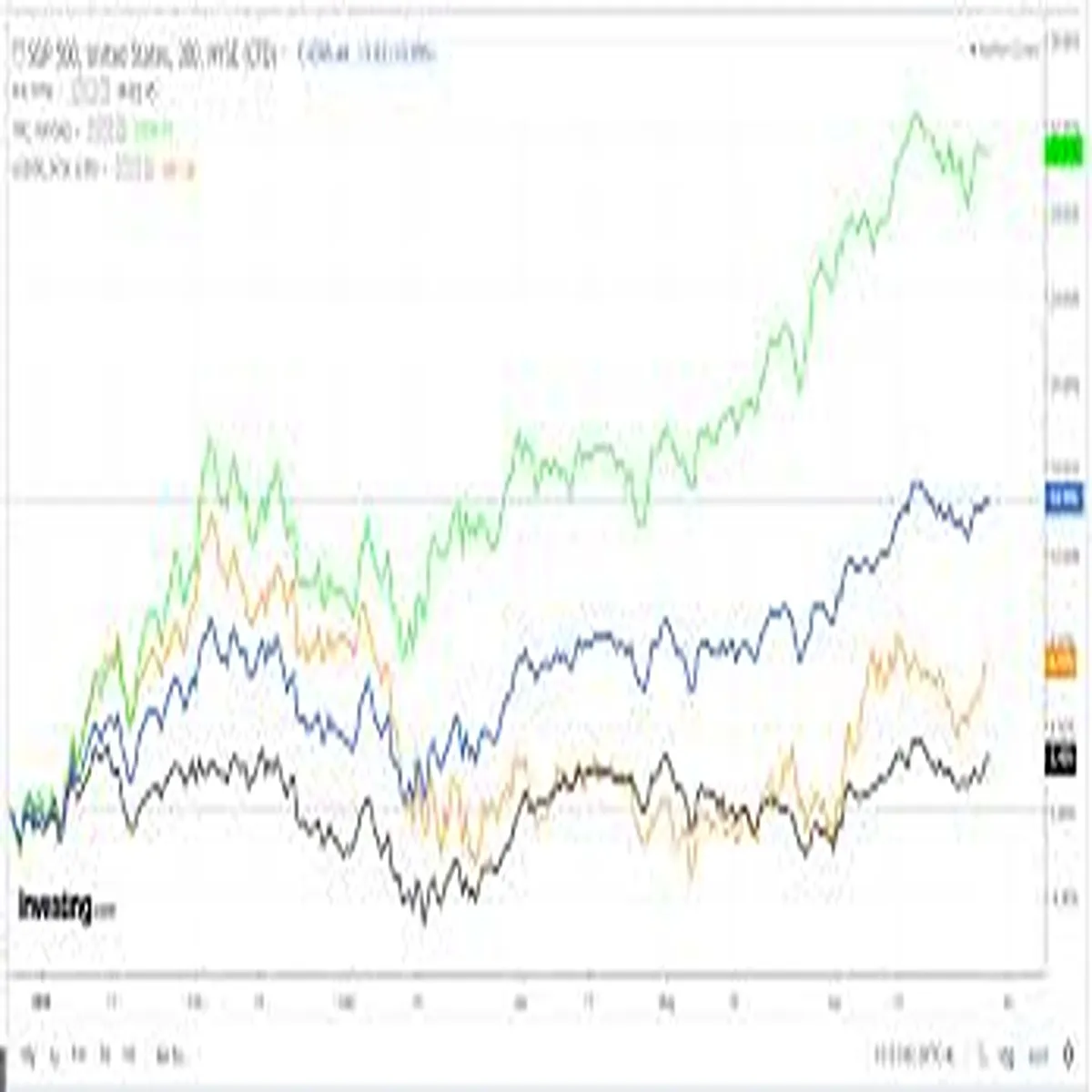
Wall Street – The U.S. stock market is moving through a pivotal stretch as investors weigh corporate earnings, Federal Reserve policy signals, and shifting economic data. After a strong rally through much of last year, Wall Street is now confronting a more nuanced environment marked by selective sector strength, cautious guidance from major companies, and renewed focus on interest rate timing. Market participants across the country—from retail investors to institutional funds—are recalibrating expectations for 2026 amid mixed but generally resilient economic indicators.
S&P 500 and Nasdaq Reflect Sector Rotation
S&P 500 and Nasdaq Composite have both experienced bouts of volatility in recent weeks, even as they remain near historically elevated levels. The broader market has seen a noticeable rotation out of high-flying mega-cap technology stocks into sectors such as healthcare, financials, and industrials.
Dow Jones Industrial Average has shown relative stability, supported by gains in energy and manufacturing names. Analysts point to profit-taking in certain AI-driven technology stocks as one reason for short-term pullbacks, rather than any fundamental deterioration in earnings trends.
Market breadth—a measure of how many stocks are participating in gains—has improved compared to earlier periods when performance was concentrated in a handful of large-cap companies. That shift is often viewed as a healthier sign for long-term market sustainability.
Federal Reserve Policy Remains Central Focus
The direction of monetary policy continues to be the dominant driver of investor sentiment. The Federal Reserve has maintained a data-dependent stance, signaling that any rate adjustments will be based on incoming inflation and labor market data.
Recent consumer price reports show inflation trending lower than peak levels seen in prior years, though still hovering near the Fed’s long-term 2% target. Employment growth remains solid, with wage gains moderating but not collapsing—an indication that the economy may be slowing gradually rather than sharply.
Bond markets have adjusted accordingly. Yields on the 10-year U.S. Treasury have fluctuated as traders attempt to price in potential rate cuts later this year. For equity investors, lower yields often provide support to growth stocks by improving discounted cash flow valuations. However, persistent inflation or stronger-than-expected economic data could delay easing, adding pressure to equities.
Corporate Earnings Deliver Mixed but Stable Signals
The latest earnings season has delivered a generally constructive picture. Many large-cap companies have reported steady revenue growth, improved operating margins, and disciplined cost management. Technology firms continue to invest heavily in artificial intelligence infrastructure, cloud computing, and cybersecurity—areas viewed as long-term structural growth themes.
At the same time, consumer-facing companies have offered cautious guidance. While spending remains resilient, executives note that higher borrowing costs and elevated credit card balances could temper demand in discretionary categories.
Financial institutions, meanwhile, have benefited from net interest income strength, though loan growth has slowed in some segments. Credit quality metrics remain manageable, according to quarterly filings, reducing immediate concerns about systemic stress.
AI Investment Continues to Drive Market Leadership
Artificial intelligence remains one of the strongest narratives influencing the U.S. stock market. Major chipmakers, cloud providers, and enterprise software firms are expanding capital expenditures to meet surging demand for AI infrastructure.
While valuations in some AI-linked stocks have expanded significantly, analysts emphasize the importance of revenue visibility and earnings growth to justify pricing. Long-term investors are increasingly differentiating between companies with sustainable competitive advantages and those benefiting primarily from short-term hype.
This shift toward fundamentals aligns with broader market behavior, as portfolio managers focus more on free cash flow, balance sheet strength, and pricing power rather than speculative momentum.
Small-Cap and Mid-Cap Stocks Seek Momentum
Small-cap stocks, often represented by the Russell 2000, have lagged large-cap peers in recent quarters. Higher interest rates typically weigh more heavily on smaller companies due to borrowing sensitivity.
However, any clear signal of rate cuts could disproportionately benefit small- and mid-cap names. Historically, these segments have outperformed during early phases of monetary easing cycles. Investors are watching closely for signs of improved credit conditions and stronger domestic growth, which tend to support smaller enterprises.
Consumer Strength and GDP Trends Remain Key Indicators
U.S. gross domestic product data continues to reflect moderate expansion rather than contraction. Consumer spending, which accounts for roughly two-thirds of economic activity, remains a pillar of resilience. Retail sales reports indicate steady demand, though growth rates have cooled compared to previous years.
Housing activity has also shown stabilization, supported by a gradual adjustment in mortgage rates. While affordability challenges persist, inventory constraints have helped prevent sharp price declines in many regions.
Economists generally describe the current environment as a “soft landing” scenario—slower growth without a severe recession. Equity markets have historically performed reasonably well under such conditions, provided corporate earnings remain intact.
Global Risks and Geopolitical Considerations
Although this article focuses on U.S. markets, global developments still influence Wall Street. Energy prices, trade relations, and geopolitical tensions can quickly affect investor risk appetite. Oil price fluctuations, for example, have implications for inflation expectations and corporate margins.
Currency movements also play a role. A stronger U.S. dollar can pressure multinational earnings by reducing overseas revenue when converted back into dollars. Conversely, a stable dollar environment tends to support more predictable profit outlooks.
What Investors Are Watching Next
Looking ahead, investors are closely monitoring upcoming inflation reports, labor market data, and Federal Reserve communications. Corporate guidance for the next two quarters will also be crucial in shaping expectations.
Market strategists advise maintaining diversified portfolios and focusing on high-quality companies with strong fundamentals. Volatility, while uncomfortable, is often a normal feature of late-cycle expansions.
With major indexes near record territory, valuations are under scrutiny. Still, earnings growth projections suggest that corporate America remains on solid footing, even amid tighter financial conditions than in prior years.
As Wall Street moves deeper into 2026, the interplay between monetary policy, corporate performance, and consumer resilience will likely determine whether the next phase brings renewed gains or extended consolidation. For now, the U.S. stock market remains supported by stable economic data and disciplined corporate management—factors that continue to anchor investor confidence.