
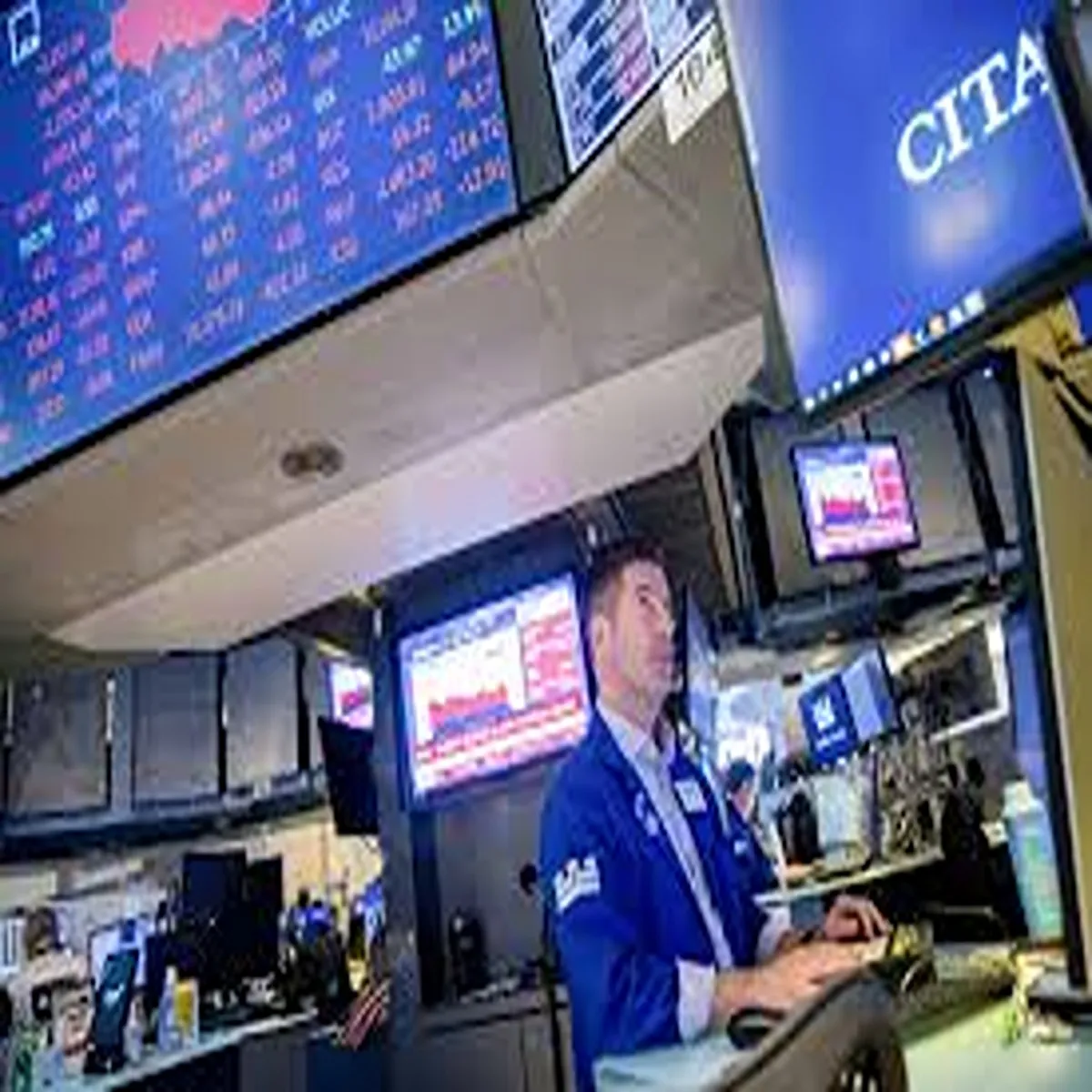
US Stock Market- The US stock market showed resilience this week as investors carefully balanced fresh economic data, corporate earnings signals, and expectations around the Federal Reserve’s next policy moves. Major indices, including the S&P 500 and Nasdaq Composite, hovered near recent highs, reflecting cautious optimism despite lingering concerns about inflation and interest rates.
Market Performance Reflects Cautious Optimism
US equities have entered a phase of consolidation after a strong rally earlier in the year. The S&P 500 has remained within a tight range, while the Nasdaq continues to outperform, supported by strength in technology stocks.
Investors appear to be adopting a “wait-and-watch” strategy. Trading volumes have been moderate, and volatility remains relatively low compared to earlier quarters. Market participants are closely tracking macroeconomic indicators rather than reacting sharply to short-term fluctuations.
Inflation Data Remains the Key Market Driver
Recent inflation reports have played a central role in shaping market sentiment. While headline inflation has shown signs of cooling compared to last year’s peaks, core inflation remains sticky, particularly in services sectors.
This mixed picture has made it difficult for investors to confidently predict the Federal Reserve’s next steps. The market is currently pricing in a scenario where interest rates may remain higher for longer, rather than expecting rapid rate cuts.
Higher borrowing costs continue to influence sectors such as real estate and consumer discretionary, while financials and energy stocks have shown relative stability.
Federal Reserve Policy Outlook Keeps Markets on Edge
The Federal Reserve’s stance remains a dominant theme in the stock market narrative. Policymakers have reiterated their commitment to bringing inflation down to the 2% target, even if it requires maintaining restrictive monetary policy.
Recent statements from Fed officials suggest that rate cuts are not imminent. Instead, the central bank is likely to depend heavily on incoming data before making any significant policy shifts.
This uncertainty has created a delicate balance in the market. On one hand, strong economic data supports corporate earnings; on the other, it raises the possibility of prolonged high interest rates.
Tech Sector Continues to Lead Gains
Technology stocks have once again emerged as the primary drivers of market performance. Large-cap tech companies have benefited from strong earnings outlooks, ongoing investments in artificial intelligence, and relatively resilient demand.
AI-related optimism has particularly boosted semiconductor and software companies. Investors see these segments as long-term growth engines, even in a higher-rate environment.
However, analysts caution that valuations in some parts of the tech sector are becoming stretched, which could limit upside potential in the near term.
Corporate Earnings Provide Mixed Signals
The latest earnings season has delivered a mixed but generally stable picture. While many companies have exceeded expectations, forward guidance has been more cautious.
Several firms have highlighted cost pressures, slower consumer spending, and global economic uncertainties as key challenges. At the same time, strong balance sheets and operational efficiency have helped many companies maintain profitability.
This divergence between current performance and future outlook is contributing to the market’s sideways movement.
Consumer Strength Supports Economic Stability
Despite concerns about inflation and interest rates, the US consumer remains relatively strong. Retail spending has held up better than expected, supported by a robust labor market and steady wage growth.
Low unemployment levels continue to underpin economic resilience, which in turn supports corporate revenues. However, there are early signs that consumers are becoming more selective in their spending, particularly in non-essential categories.
This shift could have implications for sectors such as retail, travel, and luxury goods in the coming months.
Global Factors Add Another Layer of Complexity
International developments are also influencing US markets. Geopolitical tensions, supply chain adjustments, and economic slowdowns in key regions like Europe and China are creating additional uncertainty.
Currency fluctuations and commodity price movements are further complicating the outlook for multinational corporations. Investors are increasingly factoring in these global risks when evaluating US equities.
What Investors Are Watching Next
Looking ahead, several key factors are likely to shape market direction:
- Upcoming inflation reports and labor market data
- Federal Reserve policy signals and meeting minutes
- Corporate earnings guidance for the next quarter
- Developments in AI and technology investments
- Global economic trends and geopolitical stability
Market participants are expected to remain data-dependent, with any surprises in economic indicators likely to trigger short-term volatility.
Balanced Outlook for the US Stock Market
Overall, the US stock market remains in a relatively stable position, supported by strong corporate fundamentals and a resilient economy. However, uncertainty around inflation and monetary policy continues to cap aggressive upside.
For long-term investors, the current environment presents both opportunities and risks. Diversification and a focus on fundamentally strong companies remain key strategies in navigating this phase of the market cycle.
As the second quarter unfolds, the interplay between economic data and Federal Reserve policy will likely determine whether the market breaks out to new highs or enters a period of correction.