
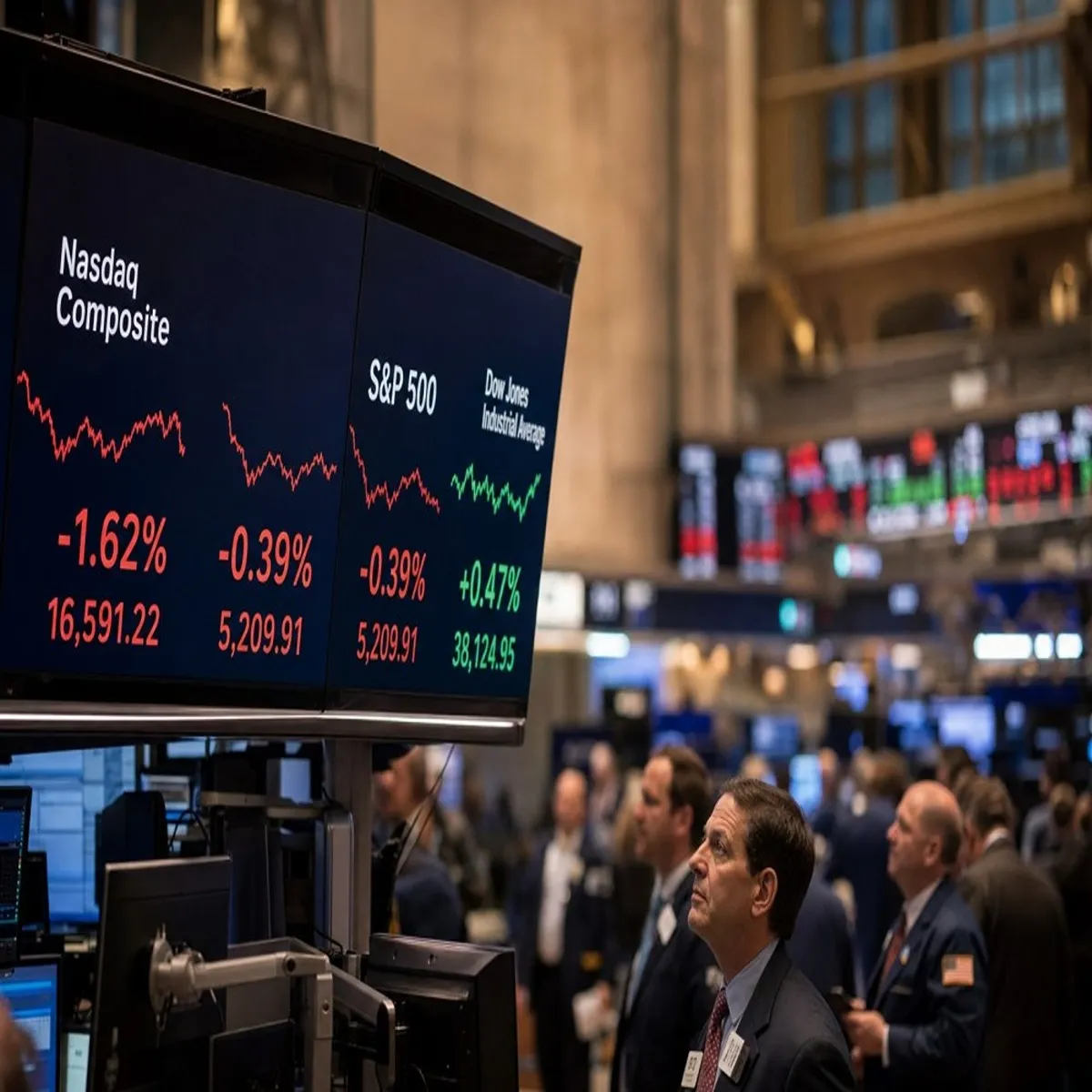
Wall- The U.S. financial market is entering a new phase of uncertainty as rising Treasury yields, stubborn inflation, and elevated consumer borrowing costs reshape investor expectations across Wall Street. While the broader economy continues to show resilience, recent market signals suggest that both households and businesses could face a more expensive financial environment through the remainder of 2026.
According to multiple recent market reports, investors are increasingly preparing for the possibility that the Federal Reserve may keep interest rates elevated longer than previously expected. Higher energy prices, geopolitical tensions, and continued strength in consumer spending are complicating the central bank’s effort to return inflation to its long-term 2% target.
Treasury Yields Climb to Multi-Year Highs
One of the clearest signs of changing market sentiment is the sharp rise in U.S. Treasury yields. The 30-year Treasury yield recently climbed above 5%, reaching its highest level since before the 2008 financial crisis. Investors are demanding higher returns as inflation concerns remain elevated and government borrowing continues to increase.
The benchmark 10-year Treasury yield, which heavily influences mortgage rates, auto loans, and corporate borrowing, has also moved significantly higher in recent weeks. Financial analysts say the move reflects a combination of persistent inflation fears and expectations that the Federal Reserve will avoid aggressive rate cuts this year.
For U.S. consumers, higher Treasury yields translate directly into more expensive financing. Mortgage rates have already climbed back above 6.5%, increasing affordability pressure in the housing market at a time when home prices remain historically elevated.
Inflation Remains a Key Concern for Policymakers
Although inflation has cooled considerably from the peaks seen in 2022 and 2023, recent data suggests price pressures are still proving difficult to eliminate completely.
Federal Reserve data indicates that core inflation measures remain above the central bank’s target, while rising energy costs are creating additional pressure across transportation, manufacturing, and household spending categories.
A recent survey from the Federal Reserve Bank of New York showed that Americans’ short-term inflation expectations increased again this spring, particularly for gasoline, food, and rent expenses.
Economists warn that prolonged inflation could gradually reduce consumer purchasing power, especially among lower-income households that spend a larger share of income on essentials such as fuel, groceries, and housing. Deloitte researchers noted that rising costs for basic goods are becoming an increasingly important risk factor for overall consumer spending patterns in the United States.
Federal Reserve Signals Patience on Rate Cuts
Despite growing pressure from financial markets and political leaders, the Federal Reserve appears unlikely to begin rapid interest-rate reductions anytime soon.
A recent Reuters survey of economists found that most analysts expect the Fed to keep benchmark rates unchanged through the rest of 2026. Many economists believe inflation remains too elevated for policymakers to confidently pivot toward lower borrowing costs.
The central bank’s cautious stance reflects a balancing act between controlling inflation and maintaining economic growth. Recent labor market data still shows relatively stable unemployment levels and moderate consumer demand, reducing the urgency for immediate stimulus measures.
At the same time, financial markets continue to monitor leadership changes at the Federal Reserve closely, especially as investors assess how future policy decisions could impact borrowing costs, business investment, and stock valuations.
AI Investment Boom Adds a New Market Dynamic
Another major force shaping the U.S. financial landscape is the ongoing artificial intelligence investment surge.
Large-scale spending on AI infrastructure, cloud computing, and semiconductor expansion has fueled strong equity market performance over the past year. Analysts estimate that trillions of dollars could flow into AI-related investments over the next several years, potentially boosting long-term productivity and economic growth.
However, the same investment boom may also contribute to structurally higher interest rates. Massive capital expenditures require significant financing, increasing demand for credit and potentially keeping Treasury yields elevated for longer periods.
Some investors now believe the U.S. economy may be transitioning into a period where both economic growth and interest rates remain higher than the ultra-low-rate environment that defined much of the 2010s.
Consumers Continue Spending Despite Pressure
Even with higher prices and rising borrowing costs, U.S. consumers have continued spending at a relatively healthy pace.
Goldman Sachs researchers recently noted that while higher gasoline and energy costs are affecting household budgets, broad recession fears have not yet materialized. Consumer-facing companies are becoming more cautious, but many executives still report stable demand across major sectors.
This resilience has helped support corporate earnings and broader stock market performance, although analysts caution that sustained inflation could eventually slow discretionary spending later in the year.
Meanwhile, Wall Street’s closely watched volatility index, commonly known as the VIX or “fear gauge,” remains relatively subdued despite growing concerns around inflation and bond-market instability. That suggests investors remain cautiously optimistic about the overall economic outlook.
What Investors Are Watching Next
Looking ahead, market participants are expected to focus heavily on upcoming inflation reports, Federal Reserve policy meetings, and Treasury market movements.
Any signs of renewed inflation acceleration could push bond yields even higher, potentially affecting stocks, real estate, and consumer borrowing activity simultaneously. Conversely, softer inflation readings later this year could revive expectations for eventual interest-rate cuts in 2027.
For now, analysts say the U.S. economy remains in a complicated transition period — one where strong consumer activity, rapid technological investment, and persistent inflation pressures are all colliding at the same time.