
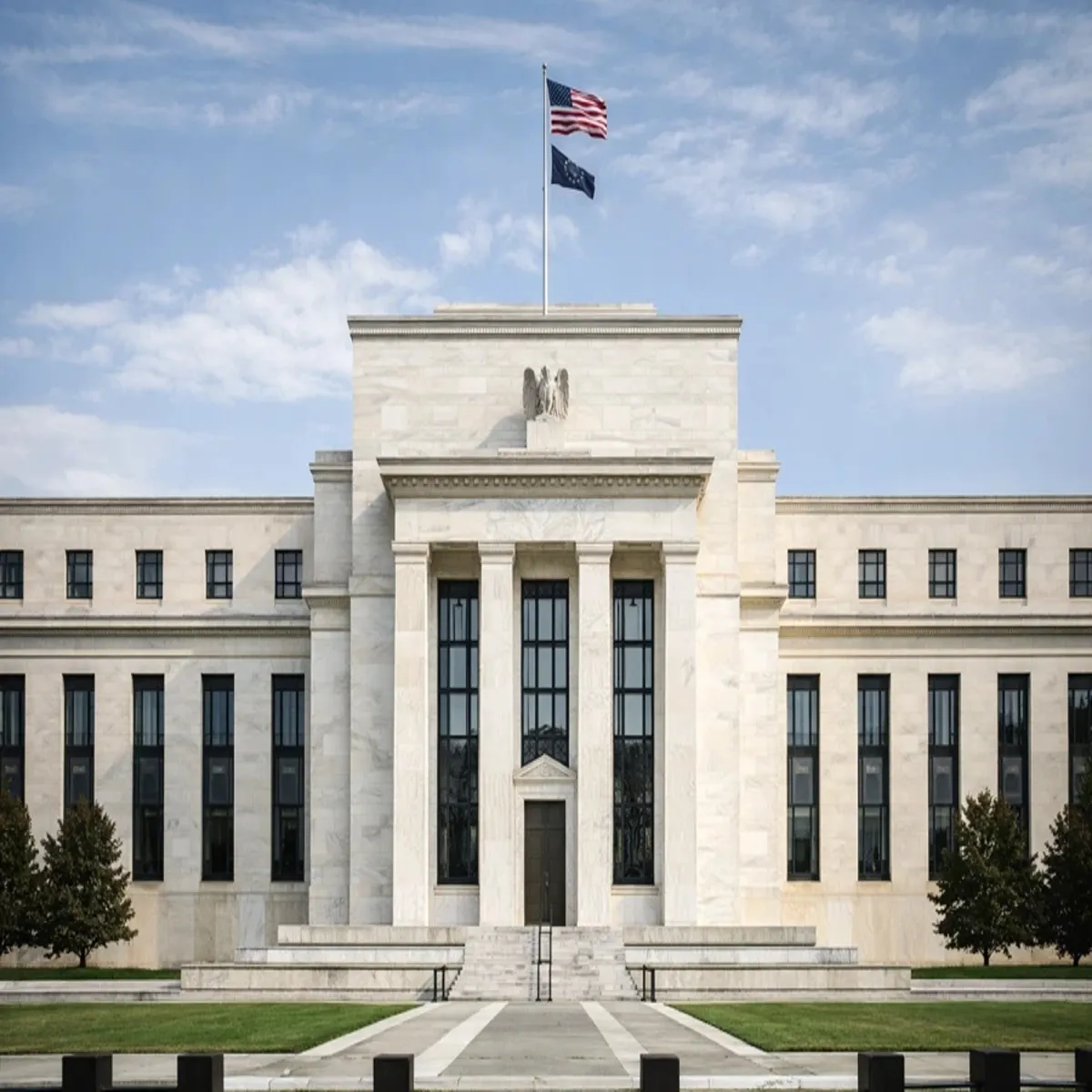
Federal- The U.S. financial landscape entered a new phase this week after the Federal Reserve left interest rates unchanged but signaled a growing willingness to tighten policy later this year if inflation remains elevated. Investors, businesses, and consumers are now adjusting expectations as policymakers balance persistent price pressures against a still-resilient economy. The latest developments have already influenced Wall Street sentiment, Treasury yields, mortgage markets, and forecasts for the second half of 2026.
Fed Holds Rates Steady but Changes the Message
At its June policy meeting, the Federal Reserve kept the federal funds rate within a range of 3.50% to 3.75%, extending a pause that has been in place for several meetings. However, the most important takeaway for financial markets was not the decision itself, but the shift in tone from policymakers. Recent projections indicate that a significant number of Federal Reserve officials now expect at least one rate increase before the end of the year, marking a notable departure from earlier expectations that borrowing costs could eventually move lower.
The central bank’s updated outlook reflects concerns that inflation remains above its long-term target. Policymakers cited ongoing price pressures, particularly in energy-related sectors, as a key reason for maintaining a cautious stance.
Kevin Warsh’s First Major Test as Fed Chair
The June meeting was the first chaired by Kevin Warsh, whose leadership style has quickly become a major topic of discussion across financial markets. Analysts noted that Warsh adopted a more streamlined communication approach compared with recent Federal Reserve leadership, placing greater emphasis on price stability and inflation control.
His remarks led many investors to reconsider assumptions that the central bank would move toward easier monetary policy in the near future. Instead, the possibility of additional tightening has returned to market forecasts. Some economists believe this shift could keep financial conditions restrictive through much of the remainder of 2026.
Wall Street Reacts to Higher-for-Longer Rate Expectations
Financial markets have spent much of the year debating whether inflation would cool enough to allow lower interest rates. The latest Federal Reserve signals have complicated that narrative.
Investors are increasingly preparing for a “higher-for-longer” rate environment. Such expectations typically affect stock valuations, particularly in growth-oriented sectors that depend heavily on future earnings projections. Treasury markets have also adjusted as traders price in a greater likelihood that rates could remain elevated or even move higher before year-end.
Market strategists note that uncertainty remains unusually high because inflation trends, consumer spending patterns, and global energy markets continue to evolve rapidly. As a result, volatility may remain a defining feature of the investment landscape throughout the summer and fall.
Inflation Remains the Key Economic Challenge
The Federal Reserve’s latest outlook underscores a reality facing American households and businesses: inflation has proven more persistent than many economists expected.
While overall economic activity continues to expand, policymakers have raised inflation expectations for the remainder of the year. Rising energy costs and broader supply-related pressures have contributed to concerns that inflation could remain above the Fed’s 2% target longer than previously anticipated.
This environment creates challenges for consumers, who continue to face elevated costs for housing, transportation, and everyday necessities. Businesses, meanwhile, must navigate higher operating expenses while managing borrowing costs that remain significantly above pre-pandemic levels.
Housing Market Feels the Pressure
One area particularly sensitive to interest-rate expectations is housing. Mortgage rates remain well above historical averages, affecting affordability for prospective homebuyers across the country.
Recent data show that the average 30-year fixed mortgage rate remains above 6.5%, a level that continues to influence home-purchase decisions. While rates have moderated from previous peaks, expectations of potential Federal Reserve tightening later this year could limit the likelihood of substantial declines in borrowing costs.
Housing economists say affordability challenges remain a major concern, especially for first-time buyers. Elevated financing costs have slowed activity in some regional markets and continue to reshape buyer behavior nationwide.
What Investors Are Watching Next
The next several months could prove decisive for financial markets. Investors will closely monitor inflation readings, employment data, consumer spending trends, and developments in energy markets.
Federal Reserve officials have indicated that future policy decisions will depend heavily on incoming economic data. If inflation remains stubbornly high, additional rate increases could become more likely. Conversely, evidence of sustained price moderation could allow policymakers to maintain current settings for a longer period.
The central bank has also launched several internal policy review initiatives that may influence future decisions regarding communication strategy, inflation measurement, and broader monetary policy frameworks. These reviews are expected to remain an important topic for economists and investors throughout the year.
Outlook for the Second Half of 2026
As the U.S. economy moves into the second half of the year, the balance between growth and inflation remains the defining financial story. Consumer spending has shown resilience, labor markets continue to provide support for economic activity, and corporate earnings have generally remained stable. At the same time, inflation risks have become harder to ignore.
For investors, the message from the Federal Reserve is increasingly clear: inflation control remains the top priority. Until there is stronger evidence that price pressures are easing sustainably, policymakers appear prepared to maintain a restrictive stance. That reality is likely to shape market performance, borrowing costs, and investment strategies for the remainder of 2026.