
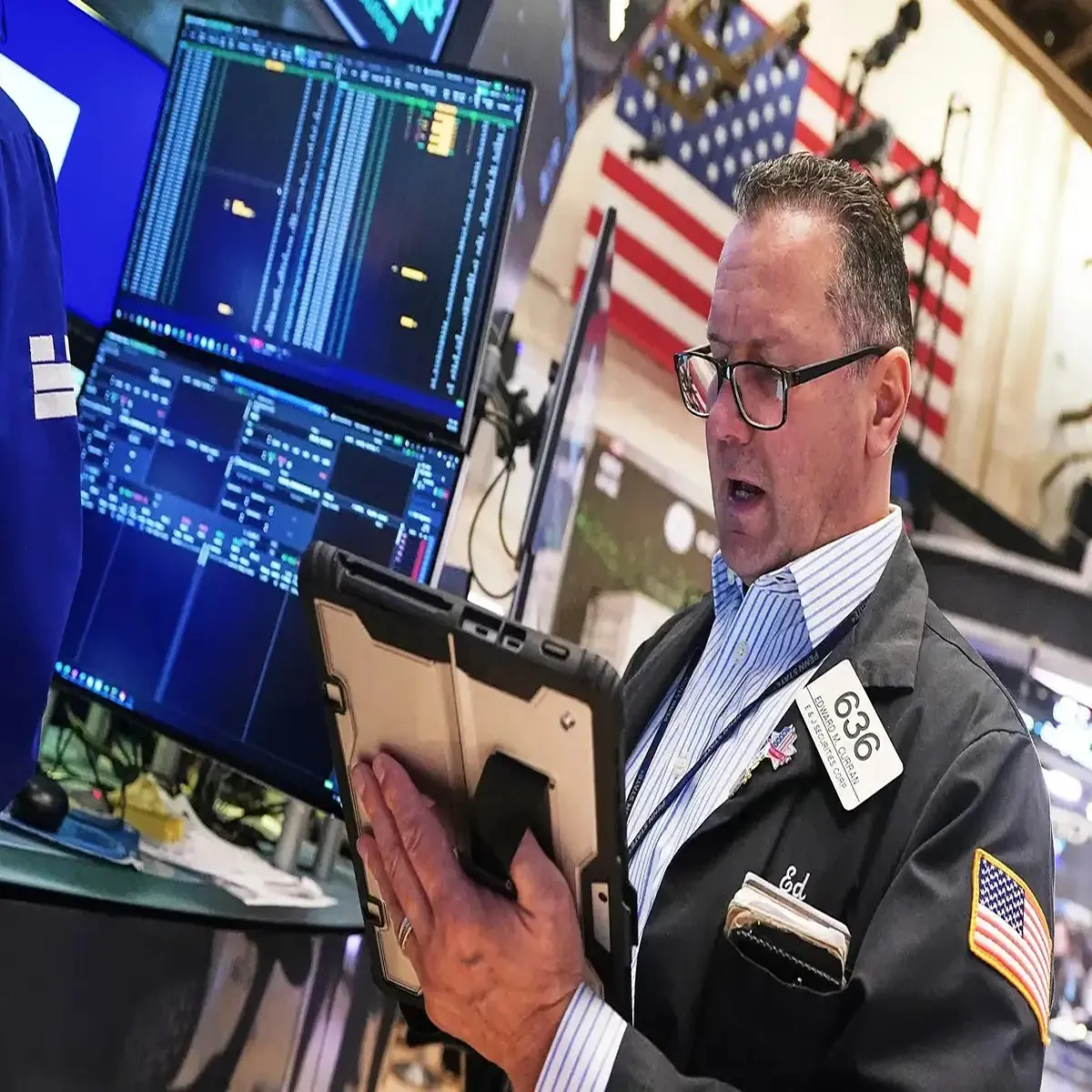
Wall- The U.S. stock market remained in focus this week as investors weighed strong corporate earnings, shifting Federal Reserve expectations, and renewed momentum in major technology stocks. Markets showed resilience despite ongoing concerns about inflation, interest rates, and global economic uncertainty, with traders closely monitoring signals that could influence the next phase of Wall Street’s direction.
The benchmark S&P 500 continued hovering near record territory after several major companies posted better-than-expected quarterly results. Meanwhile, the Nasdaq Composite outperformed broader indexes, supported by gains in artificial intelligence-linked stocks and semiconductor companies.
Technology Stocks Continue Driving Market Momentum
Large-cap technology companies once again became the primary force behind market gains. Investors responded positively to stronger revenue growth from cloud computing, AI infrastructure, and digital advertising businesses. Analysts noted that demand for enterprise AI tools and data center expansion remains a major catalyst for tech-sector growth in 2026.
Shares of NVIDIA, Microsoft, and Alphabet stayed among the most actively traded stocks as institutional investors increased exposure to companies linked to artificial intelligence development.
Market strategists said the current rally is increasingly concentrated around a small group of mega-cap technology names. While this trend has supported index performance, some analysts believe broader market participation will be necessary for the rally to remain sustainable through the second half of the year.
Federal Reserve Policy Still Dominates Investor Sentiment
The Federal Reserve remains a central focus for Wall Street traders. Investors are attempting to determine whether policymakers are moving closer toward potential rate cuts later in 2026 or whether inflation pressures could delay monetary easing.
Recent economic data showed that inflation has moderated compared with last year, but price pressures in housing, services, and labor markets continue to remain elevated in several sectors. Treasury yields moved slightly higher during the week as investors adjusted expectations around future interest rate decisions.
Federal Reserve officials have emphasized a data-dependent approach, signaling that future policy actions will largely depend on inflation trends and labor market conditions. Economists say any unexpected rise in inflation could quickly shift market expectations and increase volatility across equities.
Earnings Season Offers Mixed Signals for Investors
Corporate earnings reports delivered a mixed picture of the U.S. economy. Financial institutions generally reported stable consumer spending trends and improved trading activity, while some retail and manufacturing companies warned about slowing discretionary demand.
JPMorgan Chase and Goldman Sachs both highlighted resilient capital markets activity, reflecting continued investor participation despite macroeconomic uncertainty.
However, several consumer-focused companies reported pressure from higher borrowing costs and cautious household spending patterns. Analysts believe consumers are becoming more selective with purchases as elevated interest rates continue affecting credit card balances, mortgages, and auto loans.
AI Investment Boom Reshapes Wall Street Strategies
Artificial intelligence remains one of the most influential themes across U.S. financial markets. Fund managers increasingly view AI as a long-term structural trend rather than a short-term speculative cycle.
Investment flows into semiconductor manufacturers, cybersecurity firms, and cloud infrastructure providers accelerated over recent months. Companies associated with AI chip production and data center expansion have attracted significant institutional capital, helping push valuations higher.
At the same time, some analysts warned that rapid stock price appreciation could create valuation concerns if future earnings growth fails to meet investor expectations. Market observers continue comparing the current AI-driven rally to previous periods of heavy technology speculation, although many believe today’s corporate fundamentals are substantially stronger.
Energy and Financial Sectors Show Stability
Outside technology, the energy and banking sectors provided additional support for broader market stability. Oil prices remained relatively steady due to ongoing geopolitical tensions and global supply considerations, helping maintain investor interest in large U.S. energy companies.
Meanwhile, banks benefited from higher net interest margins and improving trading revenues. Financial stocks have recently regained momentum after periods of volatility linked to regional banking concerns in previous years.
Portfolio managers noted that diversification beyond technology could become increasingly important if interest rate uncertainty continues throughout the summer.
Retail Investors Remain Active in Market Rally
Retail trading activity has also remained elevated, particularly in exchange-traded funds and technology-focused equities. Online brokerage data showed increased participation from younger investors seeking exposure to AI-related growth opportunities.
Financial advisers, however, continue urging investors to focus on long-term diversification rather than chasing short-term momentum. Market volatility remains a key risk factor, especially as economic indicators continue sending mixed signals about future growth conditions.
Some analysts expect increased market swings in coming months as investors react to inflation reports, employment data, and additional corporate earnings announcements.
What Wall Street Will Watch Next
Looking ahead, traders are preparing for several major economic releases that could influence market direction. Upcoming inflation reports, labor market data, and Federal Reserve commentary are expected to remain primary drivers of investor sentiment.
Analysts also anticipate continued focus on technology earnings and AI investment spending trends. If corporate profit growth remains strong, markets could maintain upward momentum despite elevated valuations.
Still, economists caution that risks tied to geopolitical tensions, consumer spending slowdowns, and prolonged high interest rates could challenge investor confidence later in the year.
For now, U.S. equities continue benefiting from strong corporate balance sheets, resilient economic activity, and optimism surrounding artificial intelligence innovation. Whether the rally broadens beyond technology stocks may ultimately determine how sustainable Wall Street’s gains become in the months ahead.