
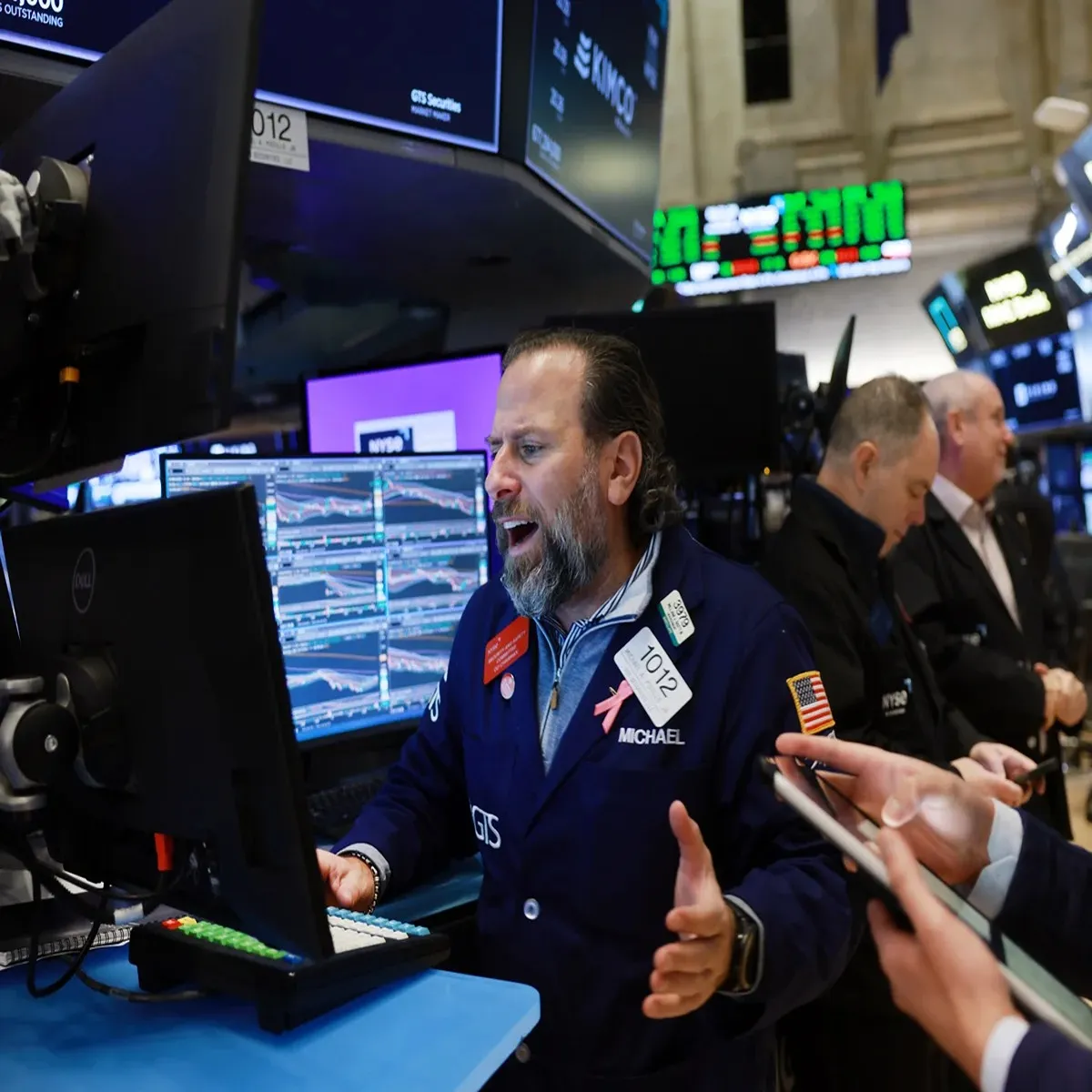
Wall Street- The U.S. stock market entered a new phase of volatility this week as investors reassessed the rapid gains that fueled Wall Street’s rally earlier in 2026. Major indexes, including the S&P 500, Nasdaq Composite, and Dow Jones Industrial Average, posted notable declines over recent sessions, driven largely by weakness in high-growth technology and artificial intelligence-related stocks. Despite the pullback, analysts note that the broader market remains positive for the year, reflecting continued confidence in the U.S. economy and corporate earnings outlook.
AI Stocks Shift From Market Leaders to Market Pressure
Artificial intelligence has been one of the strongest investment themes of the past two years, helping push many technology companies to record valuations. However, recent trading sessions have highlighted growing concerns about whether some AI-focused stocks have advanced too quickly.
The Nasdaq Composite fell sharply during the latest sell-off as investors reduced exposure to semiconductor companies and AI infrastructure providers. Market participants have become increasingly cautious about elevated valuations, especially after several companies announced major capital spending plans that raised questions about future profitability.
One of the most closely watched developments involved Super Micro Computer, which announced plans to raise billions of dollars to meet growing AI-related demand. While the company cited strong order growth, investors reacted negatively to the potential share dilution, sending the stock significantly lower. Major Indexes Record Back-to-Back Losses
Wednesday’s trading session marked one of the weakest performances for U.S. equities in several weeks. The S&P 500 dropped 1.6%, while the Dow Jones Industrial Average fell 1.9%. The Nasdaq Composite lost 2%, extending losses from earlier sessions. The decline represented the first consecutive downturn for the S&P 500 in roughly three weeks.
Earlier in the week, markets had already shown signs of instability. Sharp intraday swings reflected uncertainty among investors as they weighed inflation concerns, corporate earnings expectations, and geopolitical developments.
Despite the recent weakness, all three major indexes remain higher year-to-date. The Nasdaq continues to lead annual gains, while the Russell 2000 small-cap index has also posted strong performance in 2026.
Interest Rate Expectations Continue to Influence Trading
Federal Reserve policy remains a key driver of market sentiment. Recent economic data has complicated expectations for future interest rate cuts, leading investors to closely monitor inflation reports and labor market indicators.
A stronger-than-expected jobs report earlier this month reduced expectations for near-term monetary easing. Higher Treasury yields placed additional pressure on growth-oriented technology stocks, which tend to be more sensitive to changes in borrowing costs and discount rates.
Investors are now focusing on upcoming inflation and producer price data for further clues regarding the Fed’s next policy decisions. Any indication that inflation remains persistent could influence both bond markets and equity valuations during the second half of the year.
Global events have also contributed to market volatility. Concerns surrounding tensions involving Iran and the broader Middle East have influenced energy prices and investor sentiment.
Oil prices have experienced periods of sharp movement as traders evaluate potential risks to global supply chains. Rising energy costs can create additional inflationary pressure, which in turn affects expectations for interest rates and economic growth. Recent diplomatic developments have helped ease some concerns, contributing to a rebound in U.S. stock futures.
Analysts note that geopolitical developments remain an important factor for investors, particularly as markets continue to balance economic resilience against external risks.
Sector Rotation Becomes a Key Market Theme
While technology stocks have faced increased pressure, other sectors have begun attracting investor attention. Healthcare, financials, and certain defensive industries have demonstrated relative strength during periods of market weakness.
Market strategists point to improving market breadth in several non-technology sectors as a potentially positive sign. Sector rotation often occurs when investors seek opportunities outside areas that have already experienced significant gains.
This shift suggests that investors are not necessarily abandoning equities altogether but are instead adjusting portfolios to account for changing economic and valuation conditions.
What Investors Are Watching Next
Looking ahead, Wall Street’s focus remains on a combination of economic data, corporate earnings, and Federal Reserve guidance. Investors will closely monitor inflation reports, employment figures, and business spending trends for signs about the direction of the U.S. economy.
Technology companies are expected to remain at the center of market attention, particularly those connected to artificial intelligence infrastructure, cloud computing, and semiconductor manufacturing. Any surprises in earnings results or spending forecasts could influence broader market sentiment.
Although recent declines have generated caution, many analysts continue to view the U.S. stock market as fundamentally supported by corporate profitability, consumer spending, and ongoing innovation across multiple industries. The coming weeks may determine whether the latest pullback represents a temporary correction or the beginning of a broader period of market consolidation.